“They passed their vision screening, so their eyes are fine…right?”
Not necessarily.
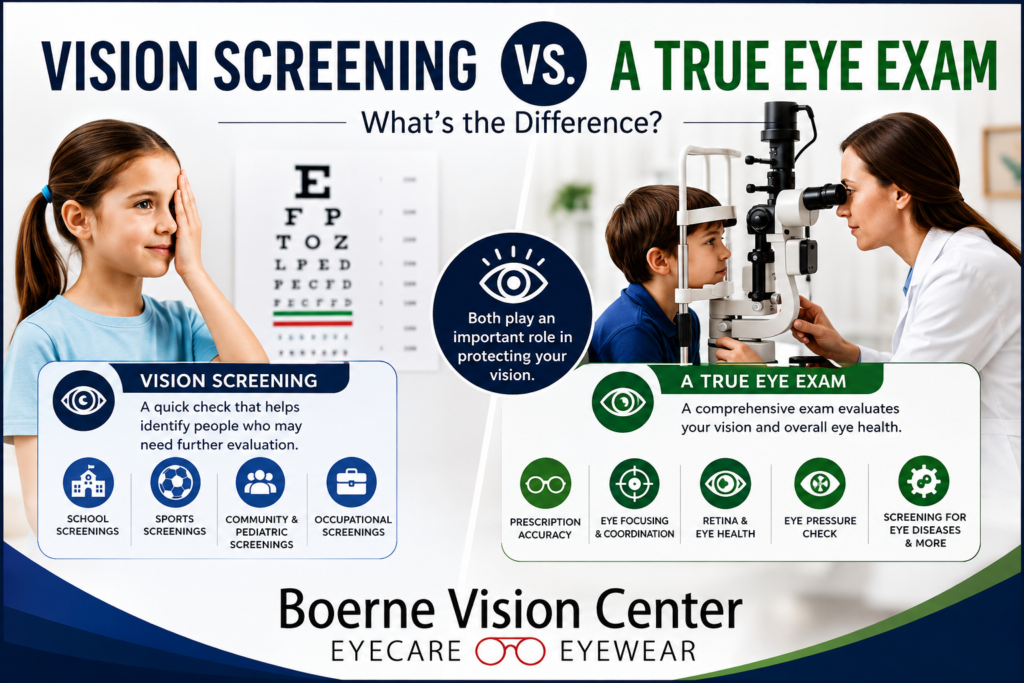
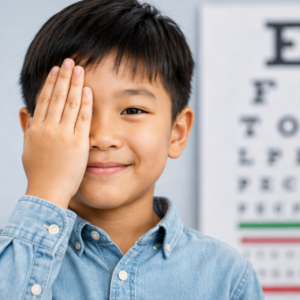
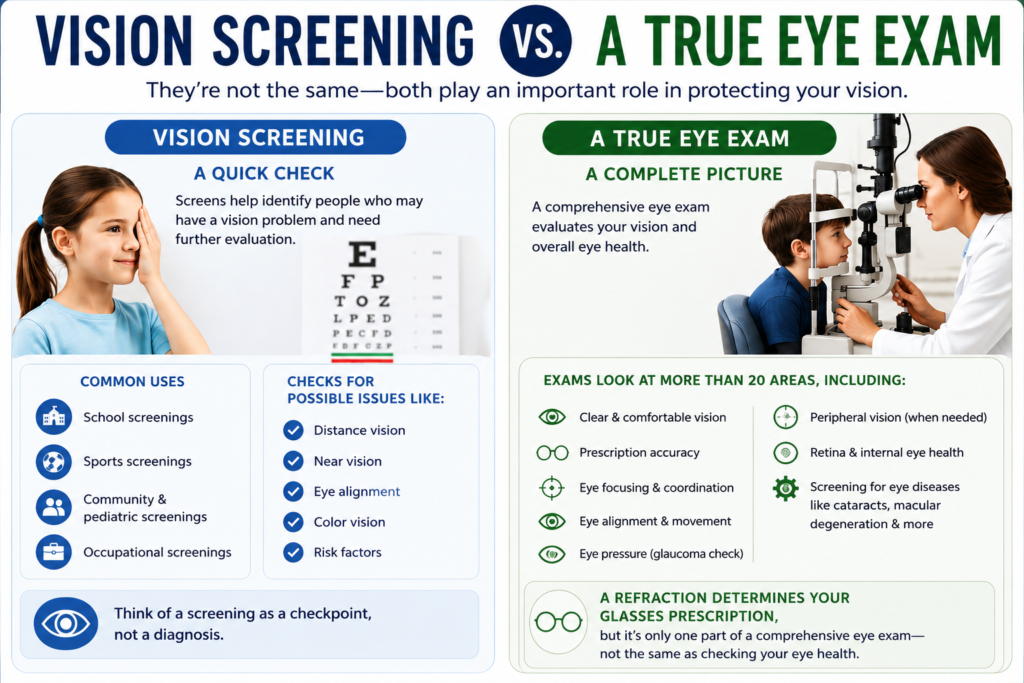
Vision screenings are valuable. They help identify people who may have a vision problem and need further evaluation.
But a screening, a sports vision check, a glasses refraction, and a comprehensive eye examination are not the same thing.
Understanding the difference can help you make better decisions about your family’s eye health.
👀 What Is a Vision Screening?
Think of a vision screening as a checkpoint—not a diagnosis.
Depending on the setting, it may check how clearly you can see at a particular distance or look for certain signs that suggest additional testing is needed.
Screenings can be incredibly useful because they are fast, accessible, and can identify people who might otherwise go without care. 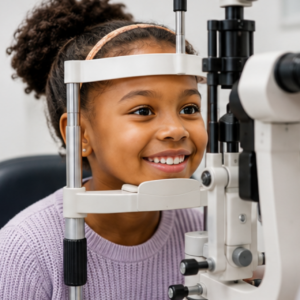
You’ll commonly encounter them in:
🏫 Schools: Texas requires vision screening or a professional examination for children entering certain schools or grades. School screenings are designed to identify students who may need further evaluation.
⚽ Sports: Athletes may encounter basic vision checks as part of sports participation or physical examinations. These can help identify obvious visual limitations, but sports performance involves much more than reading an eye chart—including tracking, depth perception, peripheral awareness, focusing, and eye coordination.
👶 Pediatric and community screenings: Pediatric offices, childcare settings, health fairs, and community programs may use visual acuity testing or instrument-based screening to identify children at risk for vision problems.
💼 Occupational screenings: Some jobs, licenses, and activities require minimum visual standards. These screenings answer a specific question: Does this person’s vision meet the required standard?
That’s different from asking:
Are the eyes healthy and functioning as they should?
👓 What About the Test for a Glasses Prescription?
Here’s another important distinction.
Refraction is the process used to determine the lens power needed to correct nearsightedness, farsightedness, and astigmatism. 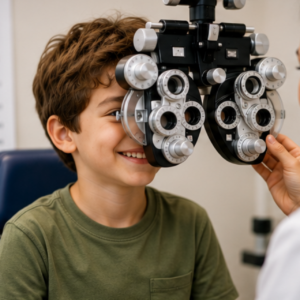
You’ve probably experienced it:
“Which is better—one or two?”
Refraction is an important part of eye care, but getting a prescription is not the same as receiving a comprehensive eye examination.
A prescription answers:
“What lenses help me see more clearly?”
A comprehensive examination asks much more:
“How well do your eyes see, work together, and—most importantly—how healthy are they?”
🩺 What Is a Comprehensive Eye Exam?
A comprehensive eye examination goes beyond screening for a potential problem.
Your eye doctor evaluates your vision and eye health using tests appropriate for your age, symptoms, history, and individual risk factors. 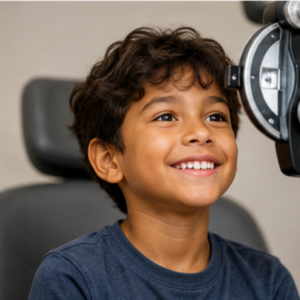
Depending on the patient, that may include evaluation of:
✔️ Visual acuity
✔️ Refractive error and prescription
✔️ Eye alignment and coordination
✔️ Focusing ability
✔️ Peripheral vision when indicated
✔️ Eye pressure when appropriate
✔️ The front structures of the eye
✔️ The retina and other structures inside the eye
✔️ Signs of eye disease or other conditions requiring additional evaluation
Dilated examination, retinal imaging, and other testing may also be recommended based on your individual needs.
That’s why a person can see 20/20 and still have an eye-health issue.
Clear vision is important.
But clear vision and healthy eyes are not synonymous.
🏫 “My Child Passed the School Screening.”
That’s great news—and school vision screenings serve an important public-health purpose. 
But passing doesn’t mean a child has received a comprehensive evaluation of their entire visual system.
Organizations including Prevent Blindness describe screenings and comprehensive eye examinations as complementary, rather than competing, forms of care.
A screening helps identify risk.
An examination evaluates and diagnoses.
Parents should pay particular attention if a child:
- Squints
- Frequently rubs their eyes
- Complains of headaches or eye strain
- Sits unusually close to screens
- Loses their place while reading
- Avoids reading or close work
- Struggles to see the board
- Reports double or blurry vision
- Has a noticeable eye turn
- Has already failed a vision screening
A child with symptoms or a failed screening should receive appropriate follow-up with an eye-care professional.
🏈 “My Athlete Passed Their Sports Screening.”
Also good news—but again, understand what was tested. 
Being able to identify letters on an eye chart doesn’t necessarily tell us everything about the visual abilities used in sports.
Depending on the activity, athletes rely on:
👁️ Eye-hand coordination
🎯 Depth perception
⚡ Visual reaction
↔️ Peripheral awareness
👀 Tracking moving objects
🔄 Rapid changes in focus
And athletes still need appropriate eye protection for sports where eye injuries are a risk.
👓 “I Just Need New Glasses.”
Maybe you do. 
But this is exactly why we don’t want patients thinking of an eye examination as simply a prescription update.
If your prescription changed, we want to understand why.
If it didn’t change, we still want to know what’s happening with the health of your eyes.
A comprehensive examination allows your optometrist to look at the complete picture—not just determine whether lens #1 or lens #2 looks clearer.
So Which One Do You Need?
A screening is excellent for identifying people who may need additional care.
A refraction determines the prescription needed to correct refractive error.
A comprehensive eye examination evaluates vision and eye health and helps diagnose conditions requiring treatment, monitoring, or referral.
They aren’t interchangeable.
And one doesn’t make the others unnecessary.
As families across Boerne, Fair Oaks Ranch, Northwest San Antonio, Leon Springs, and the Texas Hill Country head back to classrooms, sports fields, offices, and busy fall schedules, this is a good time to understand exactly what kind of vision care you and your family are receiving.
At Boerne Vision Center, our goal isn’t simply to help you read the smallest line on an eye chart.
It’s to help you understand your vision and protect your eye health for the years ahead.
Passed the screening? Great. Have questions about what should come next? Ask us.