

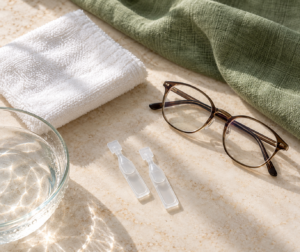
 but dry eye, eyelid irritation, contact lens wear and environmental triggers can all cause the same feeling. Gentle habits like cool compresses and not rubbing may ease mild cases, while itching that is severe, painful or stubborn deserves an eye exam. A licensed eye care provider can look at the cause and discuss options that fit your health history.
Itchy eyes are one of the most common reasons people search for help, and one of the most frustrating, because the urge to rub is hard to resist and rarely makes things better. The tricky part is that very different problems can all feel like an itch. This guide walks through the usual causes, from allergies to dry eye to everyday irritants, what you can reasonably try at home, and the signs that mean it is time to have your eyes checked rather than wait it out.
What makes eyes itch in the first place?
The surface of the eye is covered by a thin, sensitive layer called the conjunctiva, 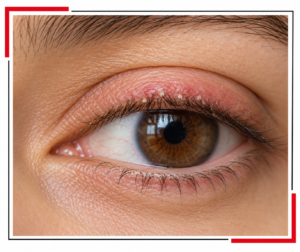 and it is richly supplied with nerves and with immune cells. When something lands on it or irritates it, those immune cells can release histamine and other chemicals, and histamine is what your body uses to signal an itch almost everywhere it happens, including the eyes.
That is why so many unrelated triggers produce the same maddening feeling. An allergen, a dry patch on the surface, a stray eyelash, smoke in the air or a reaction to a product can each set off the same response. The itch is a message that the surface is unhappy, not a diagnosis in itself, which is part of why guessing at a cause and reaching for the nearest drop does not always work.
Rubbing feels like relief for a moment because it briefly overrides the itch with pressure, but it usually backfires. It can spread whatever is irritating the eye, release more histamine, and in some cases scratch the delicate surface. Breaking the rub-itch-rub cycle is often the single most useful thing a person can do.
Could it be allergies?
Allergies are the most common reason for itchy eyes, and in and around Boerne  they are especially common thanks to the Hill Country’s heavy cedar, oak and ragweed seasons. When you are sensitive to a pollen, the eye’s surface reacts to it and you get itching, watering, redness and sometimes puffy lids, often in both eyes at once. This is called allergic conjunctivitis.
A few clues point toward allergy. The itching is usually the main complaint rather than pain, both eyes tend to be involved, the discharge is thin and watery rather than thick, and symptoms rise and fall with time spent outdoors or with the season. Many people also notice a stuffy or runny nose, sneezing or an itchy throat at the same time.
Allergy triggers are not only outdoors. Dust mites, pet dander  and mold can cause year-round itching that never seems to follow a season, which is one reason an eye that itches all twelve months is worth a closer look rather than being written off as hay fever.
When itchy eyes are really dry eyes
Dry eye disease is one of the great imitators, and it is very common in our dry, windy climate and among people who spend long hours on screens. When the tear film is unstable or there are not enough good-quality tears, the surface of the eye gets irritated, and that irritation can absolutely feel like an itch.
Signs that point more toward dry eye
- Burning, grittiness or a feeling that something is in the eye
- Vision that blurs and then clears when you blink
- Symptoms that get worse by the end of the day, on screens, or in air conditioning and wind
- Eyes that water a lot, which sounds backwards but is a classic dry-eye response
Dry eye and allergies frequently overlap, and each can make the other feel worse, which is a big reason that guessing between pharmacy products can leave people chasing relief for months.  Sorting out how much of the itch is allergy and how much is a tear-film problem usually changes what actually helps.
Other everyday causes worth knowing
Not every itch is allergy or dry eye. A handful of other causes come up often enough to be worth recognizing.
- Blepharitis, or inflammation along the lid margins, causes itching, crusting and redness right at the base of the lashes, and tends to be chronic and come and go.
- Contact lenses can trap allergens and proteins against the eye, and an over-worn or poorly fitting lens is a common source of itch, especially late in the day.
- Irritants such as smoke, chlorine, dust, makeup, or a new soap or lotion
 that migrates into the eye can all set off itching without any allergy at all.
 - Eye strain from screens does not itch on its own, but the dryness that comes with staring and under-blinking often does.
Infections are a separate matter. Thick or colored discharge, lids stuck shut in the morning, redness in just one eye or a eye that is painful rather than itchy point away from a simple itch and toward something that should be examined promptly.
What can I do at home to stop the itch?
For mild, allergy-type itching, a few steps are a reasonable place to start. 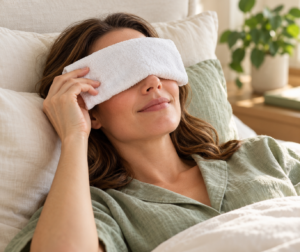 None is guaranteed, and they are not a substitute for care, but many patients find them helpful.
- Apply a clean, cool compress over closed eyes for a few minutes to calm the surface
- Resist rubbing, which spreads irritants and makes itching worse
- Rinse your face and change clothes after long stretches outdoors during allergy season
- Keep windows closed on high-pollen days and run clean HVAC filters
- If you wear contacts, give your eyes a break with glasses when they are irritated, and ask about daily disposables
- Ask a provider whether preservative-free artificial tears are appropriate to rinse and soothe the eye
Be careful with redness-relief drops. Products made mainly to get the red out can cause rebound redness with frequent use, leaving the eye looking worse once they wear off, and medicated allergy drops are not right for everyone. When in doubt, it is better to ask than to layer product on an eye you have not had looked at.
When should I see an eye doctor about itchy eyes?
It is reasonable to book an exam if the itching is severe, if it is not improving with the steps above, if it keeps coming back, or if you simply cannot tell what is causing it.  You should seek care sooner if there is pain, light sensitivity, a change in vision, thick or colored discharge, or if only one eye is affected, since those can signal something other than a simple allergy.
An exam usually includes a review of your health history and a close look at the surface of the eyes and the eyelids, so the provider can weigh allergy, dry eye, blepharitis or another cause, and whether more than one is in play. Because the right answer changes the right treatment, that sorting-out step is the whole point of coming in.
At Boerne Vision Center, Dr. Susan Ly Johnson is a therapeutic optometrist, and the practice treats dry eye disease rather than only identifying it, which is useful when itching and a tear-film problem are stacked together. Any treatment decisions are made by a licensed provider after a consultation, and results vary by patient. The office is in Hill Country Plaza, directly behind the Walgreens, open Monday through Friday from 9:00 to 5:30, and has served Boerne, Fair Oaks Ranch and the Hill Country since 2012.
- Itchy eyes most often come from allergies, but dry eye, blepharitis, contact lenses and everyday irritants can cause the same feeling, so the cause is not always obvious.
- Cool compresses, not rubbing, rinsing off pollen and careful contact lens habits may ease mild itching,
 while redness-relief drops can backfire with frequent use.
 - Pain, vision changes, colored discharge, one-eye redness or itching that will not quit deserve an exam, since the right treatment depends on the real cause.
- Myopia management for children, not only glasses
- Medical eye care including glaucoma and diabetic retinopathy
- Pre- and post-operative care for LASIK, done here rather than at the surgical center
FAQ Common questionsWhy are my eyes itchy but not red?Mild allergy or early dry eye can cause itching before there is much visible redness, and some people simply show less redness than others. If the itch is persistent or bothersome, an eye exam can help a provider find the cause even when the eye looks fairly normal. Why is only one eye itchy?A single itchy eye can come from a stray lash, a bit of makeup or debris, a localized irritation, or rubbing one side. Allergies usually affect both eyes, so one-sided symptoms, especially with pain, redness or discharge, are worth having looked at rather than assuming allergy. Can screens make my eyes itch?Indirectly, yes. Staring at screens makes people blink less, which dries the surface of the eye, and that dryness often feels like itching or grittiness by the end of the day. Regular breaks, blinking and, if a provider advises, artificial tears can help. When should itchy eyes be treated as an emergency?Seek prompt care for sudden severe pain, a marked change in vision, strong light sensitivity, or an eye that is very red with thick discharge. Those symptoms point away from a simple itch and toward a problem that should be examined without delay. |
Ready to find out what is behind the itch? Or call (830) 331-8745 · 124 East Bandera Road, Boerne |